Exploring next-generation sequencing, automated laboratory workflows and genomic data analysis for preimplantation genetic testing.
As assisted reproductive technologies continue to evolve, genomic tools are creating new opportunities to investigate chromosome copy-number changes in embryos. One such approach is preimplantation genetic testing for aneuploidy (PGT-A), which examines whether sampled embryonic cells show evidence of an abnormal number of chromosomes.
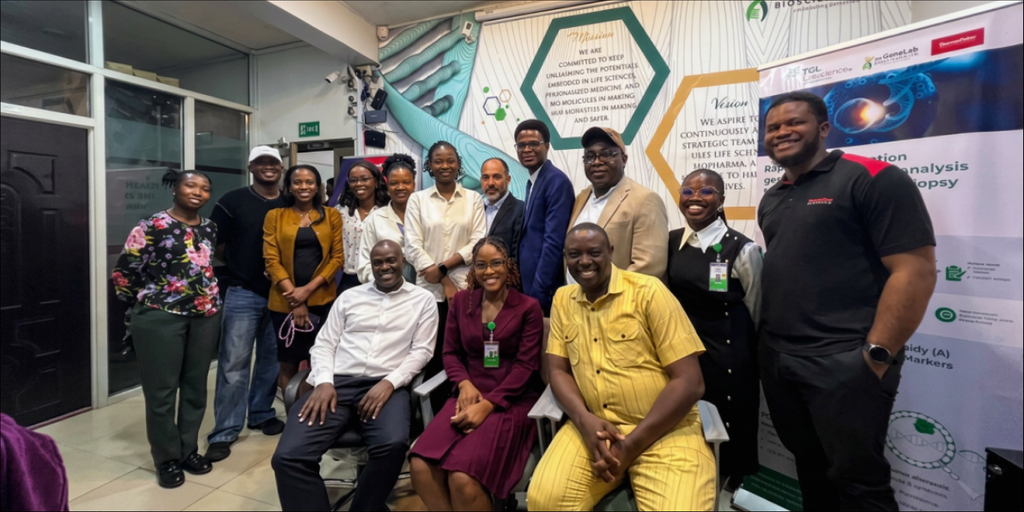
To support knowledge-sharing and practical understanding of this technology, The GeneLab Lifescience, in collaboration with Thermo Fisher Scientific, hosted “Let’s Do the Work” The Ion ReproSeq™ PGT-A Workflow Training & Demonstration in Lagos, Nigeria.
The programme brought together reproductive-health professionals, embryologists, IVF specialists, molecular scientists and laboratory personnel for discussions and demonstrations covering the Ion Torrent™ NGS platform and the stages involved in the Ion ReproSeq™ PGT-A workflow.
Thermo Fisher Scientific representatives Uchenna Urom, Maina Duncan and Gonçalo Carvalho joined the The GeneLab Lifescience team to contribute to the technical sessions and discussions on reproductive-health solutions.
The central focus was to help participants understand not only the individual instruments, but also how the different stages of an NGS workflow connect—from preparing a sample for sequencing to analysing the resulting genomic data.
Understanding PGT-A, PGT-M and PGT-SR
Preimplantation genetic testing (PGT) examines embryos created through IVF for specific genetic or chromosomal abnormalities before embryo transfer. The three main types are PGT-A, PGT-M and PGT-SR.
PGT-A (Preimplantation Genetic Testing for Aneuploidy)
PGT-A assesses chromosome numbers in embryo biopsy samples to identify aneuploidy—an abnormal number of chromosomes. NGS, including the Ion ReproSeq™ PGS workflow, can assess chromosome copy-number patterns to identify potential chromosomal imbalances. Results can support embryo assessment but do not guarantee a successful pregnancy.
PGT-A is also distinct from PGT-M, which targets specific monogenic conditions, and PGT-SR, which addresses structural chromosomal rearrangements.
PGT-M (Preimplantation Genetic Testing for Monogenic Disorders)
PGT-M identifies specific inherited genetic variants associated with single-gene conditions, such as sickle cell disease, cystic fibrosis and spinal muscular atrophy. It is used when a known genetic risk has been identified in a family.
PGT-SR (Preimplantation Genetic Testing for Structural Rearrangements)
PGT-SR assesses embryos when a parent carries a structural chromosome rearrangement, such as a translocation or inversion, which may result in embryos with unbalanced chromosome material.
Although all three approaches support reproductive decision-making, each addresses a different genetic question and requires an appropriate testing strategy.
Inside the Ion ReproSeq™ PGT-A Workflow
The demonstration explored the principal stages of an Ion Torrent-based NGS workflow. Each stage has a specific purpose, and the quality of the final analysis depends on appropriate sample handling, process control and data interpretation throughout the workflow.
1. Sample preparation and whole-genome amplification
The process begins with an appropriately collected and prepared embryo biopsy sample. Because a trophectoderm biopsy contains a limited number of cells, the quantity of DNA available may be insufficient for direct sequencing. Whole-genome amplification (WGA) is therefore used to amplify the DNA before downstream library preparation.
Consistent sample handling and adherence to the validated protocol are important for reducing contamination risks and supporting reliable downstream analysis.
2. Library preparation
Following amplification, the DNA is processed into a sequencing library. Library preparation creates DNA fragments with the required sequencing adapters so that the material can be processed by the sequencing platform.
The quality and quantity of the prepared library are important considerations because they influence downstream processing and sequencing performance.
3. Automated template preparation using the Ion Chef™ System
The Ion Chef™ System automates key stages of template preparation for compatible Ion Torrent workflows. In the demonstrated workflow, it supported the preparation of sequencing material for subsequent analysis on the Ion GeneStudio™ S5 System.
Automation can help standardise repeatable processing steps and reduce manual handling. However, successful operation still depends on appropriate instrument setup, compatible consumables, correct loading and adherence to the relevant protocol.
During the event, participants observed the Ion Chef workflow in small groups, allowing for closer engagement with the instrument and its operational steps.
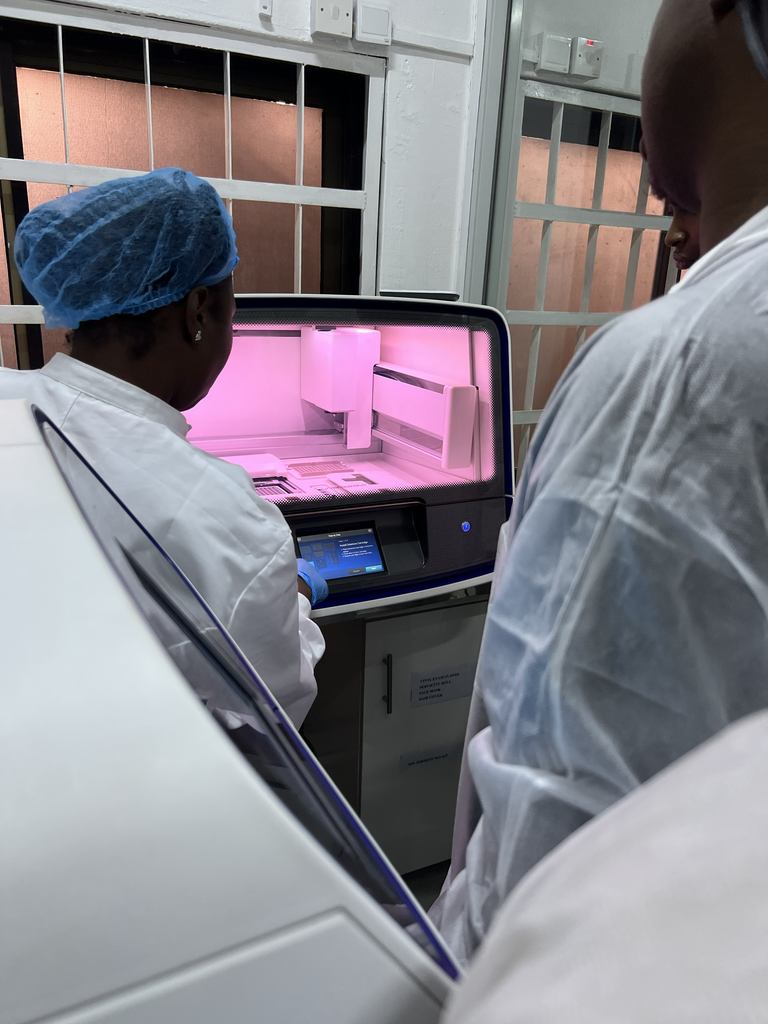
4. Next-generation sequencing on the Ion GeneStudio™ S5 System
The prepared sequencing material is loaded into the chip onto the Ion GeneStudio™ S5 System for sequencing. Ion Torrent sequencing detects changes associated with nucleotide incorporation and converts these signals into sequence data.
For PGT-A, the analytical objective is not primarily to identify a single DNA variant. Instead, the workflow evaluates patterns of DNA representation across chromosomes to identify evidence consistent with chromosome copy-number gains or losses.
Sequencing performance, library quality, appropriate controls and downstream quality metrics all contribute to the assessment of whether a dataset is suitable for interpretation.
5. Planned-run setup and data processing in Torrent Suite™ Software
The demonstration also covered creating a planned run in Torrent Suite™ Software. Run planning is an important operational step because it establishes the configuration and sample-related information needed for the sequencing workflow.
Following sequencing, Torrent Suite processes the generated data through the applicable analysis pipeline. Correct configuration and accurate sample identification are essential to maintaining traceability and supporting appropriate downstream interpretation.
6. Genomic data analysis using Ion Reporter™ Software
Sequencing produces data; analysis turns those data into information that can be evaluated.
Ion Reporter™ Software supports downstream analysis of compatible sequencing data using applicable workflows. In the demonstrated PGT-A context, the analysis focuses on chromosome-level copy-number patterns and associated quality information.
Interpreting a report requires more than identifying a plotted gain or loss. Users must understand the analysis workflow, quality indicators, limitations and the distinction between a software-generated result and a clinically meaningful conclusion.
The event included a demonstration of data analysis and report interpretation, reinforcing the importance of bioinformatics knowledge alongside laboratory proficiency.
Connecting the Entire Workflow
A key learning point from the demonstration was the need to view PGT-A as an integrated process rather than a single instrument or software application.
The overall workflow connects:
Embryos → Whole-genome amplification → Library preparation → Ion Chef™ template preparation → Ion GeneStudio™ S5 sequencing → Torrent Suite™ processing → Ion Reporter™ analysis and interpretation
Each stage contributes to the quality and usability of the final data. An error or inconsistency at an earlier stage may affect subsequent processing, which is why laboratory procedures, training, quality management and traceability matter across the complete workflow.
The programme combined technical presentations with practical demonstrations. Participants explored planned-run creation, observed the instrument workflow in rotating small groups, and engaged in discussions about implementation and interpretation. These sessions helped connect the underlying scientific principles with the practical considerations of operating an NGS-based workflow.
Advancing Reproductive Health Through Strategic Partnership.
The “Let’s Do the Work” demonstration reflected a shared commitment by The GeneLab Lifescience and Thermo Fisher Scientific to technical education, collaboration and greater familiarity with genomic workflows in Nigeria.
By bringing together product knowledge, hands-on demonstrations and scientific discussion, the event created an opportunity for participants to explore how the stages of an NGS workflow fit together and what is required to operate such a workflow effectively.
For The GeneLab Lifescience, supporting reproductive-health laboratories involves more than supplying instruments and reagents. It also means helping customers understand workflow requirements, build technical knowledge and identify solutions that align with their laboratory goals.
As interest in reproductive genomics continues to develop, education and responsible implementation will remain essential to making these technologies accessible to appropriately equipped and supported laboratories.
Are you exploring an NGS-based PGT-A workflow for your IVF facility?
Contact The GeneLab Lifescience to discuss your laboratory requirements, available workflow options, training needs and technical support.